Billy wallson
Senior DirectorA gentle month-by-month look at what's ready to harvest in the wild, so you always know where to start looking.
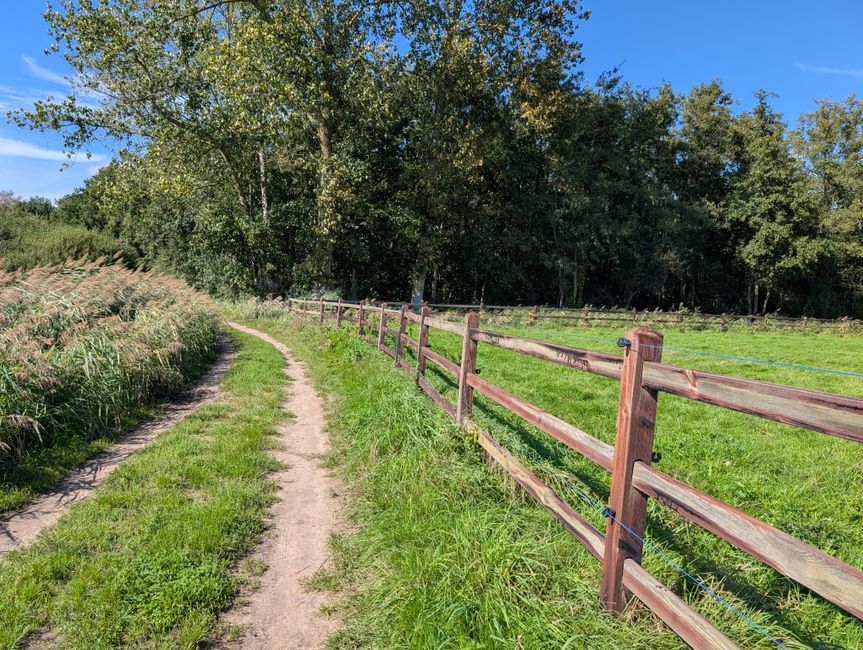
Most beginners start foraging the same way: they walk into a woods or meadow, hope something edible jumps out at them, and go home with tired legs and an empty bag. The problem is not the plants. It is the approach. Wild edible plants are not spread evenly across the land like grass seed. They cluster in specific places for specific reasons, and once you learn to read those reasons, you stop wandering and start finding.
Think of the landscape as a set of clues. Every plant has a preference for light, water, soil, and disturbance, and those preferences show up in the terrain around you. A forager who can look at a patch of ground and predict what might grow there has a huge advantage over one who simply memorizes plant photos.
The most productive places in nature are rarely the deep interior of a forest or the middle of a manicured field. They are the edges, the seams where two habitats meet. Where a meadow meets a treeline, where a path cuts through a thicket, where a stream spills into a marsh, you get a mix of light and shade, moisture and drainage, that suits a huge range of plants.
Walk a hedgerow in early spring and you may pass chickweed, garlic mustard, violets, and wild strawberry within a few steps, all crowding the sunny side of the same boundary. The same is true along fence lines, old stone walls, and the shoulders of country roads. These are not random sightings. They are the plants taking advantage of the extra light and the disturbed soil that edges provide.
When you arrive somewhere new, do not head straight for the middle. Walk the perimeter first. Trace the boundary between field and forest, between wet ground and dry. That ribbon of transition is where you will do most of your learning and most of your gathering.
Water is the second great clue. Low spots, creek banks, ditches, and the damp ground at the base of a slope hold moisture longer than the surrounding land, and many of the best wild greens love that. Watercress, mint, cattail, and jewelweed all signal wet feet. If you learn to notice where the ground stays dark and soft, you will find whole plant communities that never appear on the dry ridge above.
Disturbance is the third clue, and it is the one beginners overlook most. Plants that thrive around human activity, sometimes called volunteer or pioneer plants, are often the easiest edibles to identify and the most abundant. Think of the weeds that appear in a newly turned garden bed, along a gravel driveway, or in the rubble of an old foundation. Lambsquarters, purslane, plantain, and amaranth all follow disturbance. They are nature's first responders to bare soil.
This does not mean you should harvest from a sprayed roadside or a chemical-laden lot. It means you should recognize the pattern and then look for the same pattern in cleaner places: an organic farm's fallow corner, a trailhead that sees foot traffic but no herbicide, a riverbank that floods and scours itself every spring.
Put the three clues together and you can plan a walk instead of hoping for luck. Pick a route that passes an edge, crosses a creek, and skirts some disturbed ground, and you have stacked the odds in your favor. You will still need to identify what you find with certainty before you eat it, but at least you will be looking in the right places. Foraging is less about memorizing a thousand plants and more about learning to see the land the way the plants do.

You do not need a wilderness to forage. With a few precautions, the edges of your own neighborhood can be a productive and convenient classroom.

Good foraging is about more than identification, it's about respecting the land, the law, and the plants themselves.
Everything a total beginner needs to know before picking their first wild plant, from safety rules to the gear you actually need.

Why the humble dandelion is the perfect beginner plant, and how to use every part of it from root to flower.

A gentle month-by-month look at what's ready to harvest in the wild, so you always know where to start looking.

Meet a handful of mild, easy-to-identify spring greens that can go straight from the yard to your salad bowl.

Copyright © 2026 Bramble Wise. All Rights Reserved.


Roseanne Williams
Sep 7, 2026 ReplyLearn how to read edges, water lines, and disturbed ground so you spend less time wandering and more time filling your basket.